

A Complete Guide to Automated Appointment Reminders that Actually Reduce No-Shows
Executive Summary
- The Cost: No-shows cost B2B sales teams and service clinics thousands in lost revenue and wasted hours monthly.
- Standard Failure: One-way generic emails are ignored; reminders need to be interactive, conversational, and multi-channel.
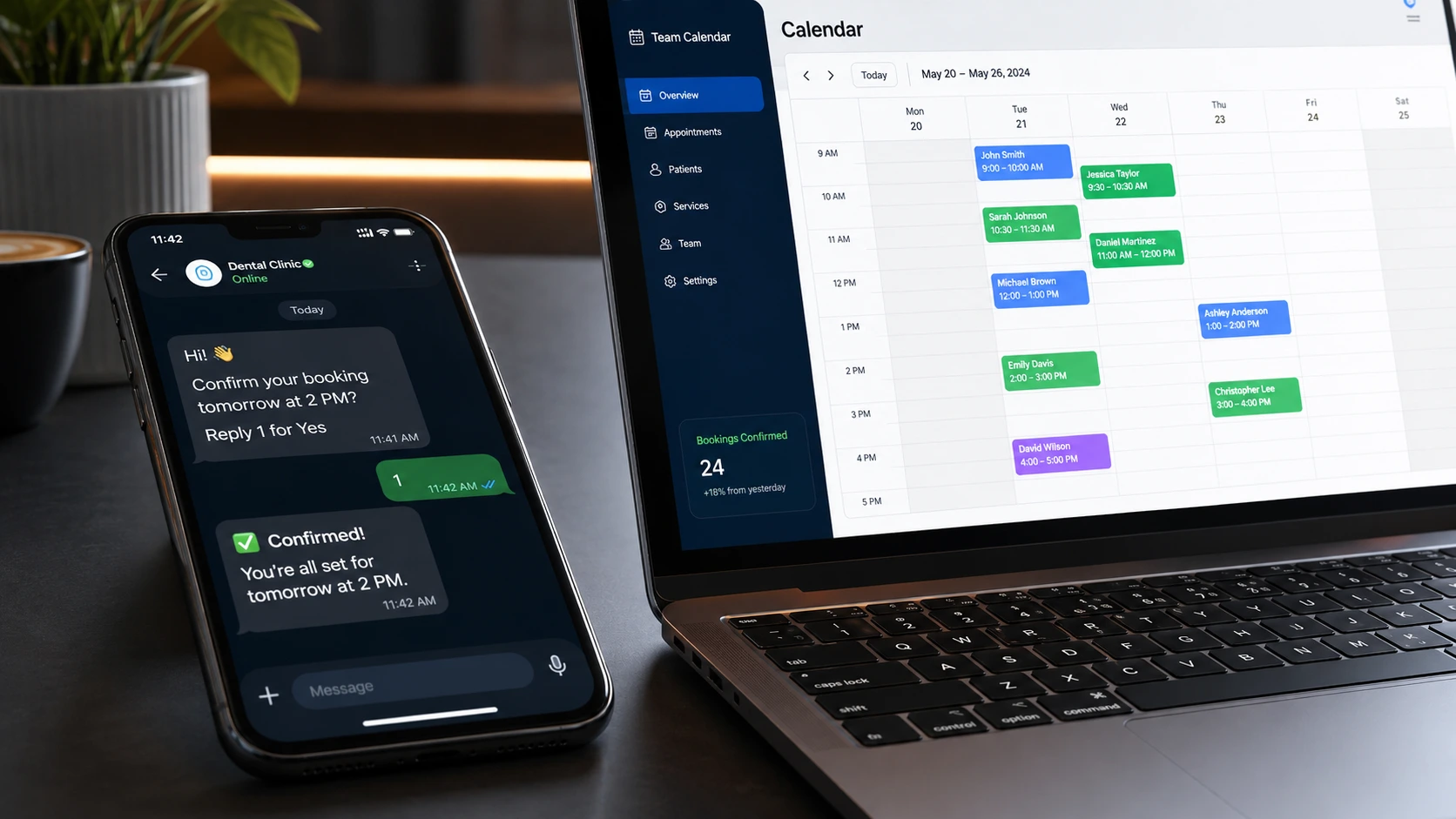
- The AI Edge: Rather than a rigid template, automated appointment reminders and confirmations should enable instant two-way reschedule coordination.
- Action Plan: Combine SMS, Email, and WhatsApp sequences timed perfectly at 24-hour and 2-hour intervals.
For any appointment-based business—whether you are a B2B SaaS company running demo calls, a medical clinic, a law firm, or a home services provider—a no-show is a direct hit to your bottom line. You have spent money on marketing to capture the lead, paid your staff to prepare for the meeting, and blocked out valuable time on your calendar. When a client simply doesn't show up, that time is lost forever.
Most businesses try to solve this with simple email notifications, yet no-show rates remain stubbornly high. This guide breaks down how to design intelligent, conversational reminder sequences that engage clients and drastically reduce no-show rates.
1. The Financial Cost of No-Shows
In B2B sales, a typical qualified meeting is valued at $200 to $500 depending on your deal size. If your sales reps experience a 20% no-show rate on 50 demos a month, that represents up to $5,000 in monthly squandered pipeline. In healthcare and professional services, empty chairs represent immediate revenue loss that can never be recovered. Reducing no-shows by even 5% to 10% yields immediate, compounding profitability.
2. Why Standard Reminders Fail
Most booking widgets send a generic confirmation email immediately, followed by a reminder email one hour before the event. This approach fails for three primary reasons:
- Low Email Open Rates: Personal email inboxes are cluttered. Booking confirmations often go to spam, promotions, or are simply missed.
- No Frictionless Reply Path: If a client realizes they can't make it, a standard reminder email makes rescheduling difficult (e.g. requiring them to find a link, click it, and re-select a date). They usually just ignore it.
- Robotic Tone: Standard templates look spammy, reducing the patient's or lead's sense of accountability to show up.
3. Anatomy of an AI-Powered Reminder Sequence
An intelligent reminder sequence is dynamic, interactive, and conversational. Rather than just blasting notifications, the AI schedules the outreach based on human behavioral patterns:
- Step 1: Instant Confirmation (SMS + Email): Sent immediately after booking. Contains calendar invitations (.ics) and a clear, friendly confirmation of the agenda.
- Step 2: 24-Hour Check-in (SMS/WhatsApp): Ask for confirmation. Instead of *“Your appointment is tomorrow,”* ask: *“Hi David, just checking if we are still good for our call tomorrow at 2 PM? Reply YES to confirm, or let me know if you need to reschedule.”*
- Step 3: 2-Hour Quick Alert (SMS): Sent shortly before the call. Includes the link to join (Zoom/Google Meet) or the office location address.
4. 3 Best Practices to Eliminate No-Shows
To maximize attendance, implement these three core principles:
- Use SMS and WhatsApp: SMS open rates hover around 98%, with most read within 3 minutes of receipt. Texting is far more effective than emailing.
- Personalize the Outreach: Include specific details, like the rep’s name they are meeting with, or a brief mention of the pre-meeting questionnaire they completed.
- Keep it Interactive: Allow patients to reschedule by simply replying to the text message. If they reply *“I can't make it, can we do next week?”*, the AI should handle the response.
5. Automating the Rescheduling Loop
The magic of an AI-driven sequence is the automatic reschedule. If a prospect replies that they are busy, the bot doesn't require a human rep to follow up.
A custom AI appointment booking system built by Softosmith automatically parses cancellation intent. If a prospect texts back saying they have an emergency, the AI conversational agent immediately replies with: *“No problem! Let’s find another time. Would next Tuesday at 10 AM or Wednesday at 1 PM work for you?”* The bot handles the entire rescheduling loop, saving the deal in real time.
SMS Reminder Compliance by Region
Automated reminders are governed by real regulation, and it varies by market. In the US, the Telephone Consumer Protection Act (TCPA) governs automated appointment texts, so every sequence needs documented consent and a working opt-out. In the UK, UK GDPR and ICO guidance on automated messaging apply. In Australia, the Spam Act 2003 and Privacy Act 1988 set the opt-in and opt-out requirements for automated SMS. In healthcare specifically, reminder content also needs to respect data handling rules like HIPAA in the US or ADHA/DoH guidance in the UAE. Building consent and opt-out into the sequence from day one avoids a compliance retrofit later.
Beyond the Generic Reminder
Reminders and confirmations are not just a medical-clinic problem. The same conversational, two-way sequence works anywhere a business books recurring, appointment-based time: dental practices chasing hygiene recalls (see our dental AI smart scheduling guide), physiotherapy clinics managing treatment plans, and property managers coordinating inspections and maintenance visits. If you are evaluating AI appointment booking software for one of these more specific use cases, the core reminder architecture in this guide is the same; only the messaging and compliance details change per industry.
Automate Your Confirmations Today
Don't let empty calendar slots drain your team's energy and revenue. Implement a multi-channel, conversational reminder system that keeps prospects engaged. Discover how Softosmith's custom AI appointment booking services can help automate your client confirmation flows today.
Frequently Asked Questions
Are automated appointment reminder texts legal in the US?
Yes, when consent is handled correctly. The Telephone Consumer Protection Act (TCPA) governs automated appointment texts in the US, so reminder sequences need documented opt-in consent and a clear opt-out path in every message.
Do automated reminders need to comply with GDPR in the UK?
Yes. UK businesses sending automated appointment reminders should follow UK GDPR and ICO guidance on automated messaging, including a lawful basis for contact and an easy way for recipients to stop future messages.
How much can automated reminders actually cut no-show rates?
Results vary by industry and how interactive the sequence is, but two-way, conversational reminders that let a patient or lead reply to reschedule consistently outperform one-way generic email reminders.
Do automated appointment reminders work for physiotherapy and property management, not just clinics?
Yes. Any business with recurring bookings, physiotherapy sessions, property inspections, service calls, benefits from the same conversational reminder and waitlist-backfill pattern originally built for medical and dental scheduling.